What is the Best Thing to Put in the Bottom of Pots for Drainage?
If you asked this question twenty years ago, the answer would have been “gravel” or “pottery shards.” However, modern horticultural science has proven this old-school advice is not just wrong—it’s actually dangerous for your plants.
The best thing to put in the bottom of your pot for drainage is nothing.
Here is why the old method fails, and what you should do instead to keep your plants healthy.
1. The Myth of the “Drainage Layer”
For generations, gardeners believed that adding a layer of rocks, pebbles, or broken ceramics at the bottom of a pot helped water drain faster.
The Reality: This practice creates a “Perched Water Table.” Water does not move easily from fine material (soil) to coarse material (rocks). Instead of draining through the rocks, the water “perches” or pools in the soil just above the rock layer.
The Result: You are essentially raising the water table closer to the plant’s roots.
The Risk: The roots sit in a soggy, saturated zone (the “muck”), leading to root rot much faster than if the pot was filled entirely with soil.
2. What to Use Instead (To Keep Soil In)
While you shouldn’t use rocks for drainage, you do need something to stop your potting mix from washing out of the drainage hole every time you water.
Here are the best materials to place over the hole that won’t block water flow:
Coffee Filters: The gold standard. They are cheap, biodegradable, and allow water to pass through freely while keeping dirt inside.
Mesh Drywall Tape: A small square of self-adhesive mesh tape over the hole is a permanent solution that never rots.
Window Screen: Have old fiberglass window screening? Cut a small square and place it over the hole. It’s reusable and durable.
A Single Pottery Shard: If you have a broken terracotta pot, place one curved piece over the hole. Do not create a flat layer; just cover the hole loosely so water can escape around the edges.
3. How to Actually Improve Drainage
If you are worried about drainage, don’t look at the bottom of the pot—look at the soil mix. The drainage happens throughout the entire pot, not just at the base.
To improve drainage, mix these into your soil:
Perlite: The white, popcorn-looking bits. They create air pockets.
Pumice: A heavier, more durable volcanic rock that provides excellent aeration.
Coarse Sand/Horticultural Grit: Great for succulents and cacti that need water to pass through instantly.
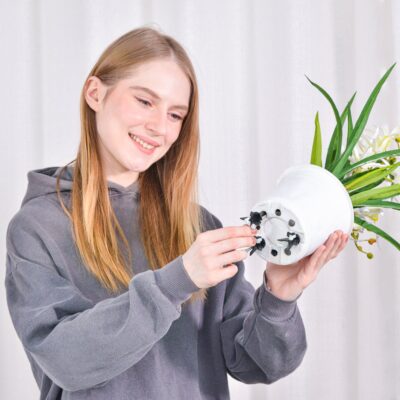
self- watering
4. What About Huge Planters?
If you have a massive planter and don’t want to spend a fortune filling the whole thing with soil, you can use “fillers” at the bottom. Note: This is for volume, not drainage.
Upside-down plastic nursery pots: These create a large air void at the bottom.
Crushed plastic water bottles: A lightweight way to fill space.
Styrofoam chunks: Effective, though not eco-friendly.
Tip: If you use fillers, always place a layer of landscape fabric (weed barrier) between the filler and the soil so the soil doesn’t wash down into the gaps.
The Bottom Line
Forget the rocks. For the healthiest plants:
Use a pot with a drainage hole.
Cover the hole with a coffee filter.
Fill the entire pot with high-quality potting mix amended with perlite.
Article copyright by GreenShip


Comments
Post a Comment